flydubai
About
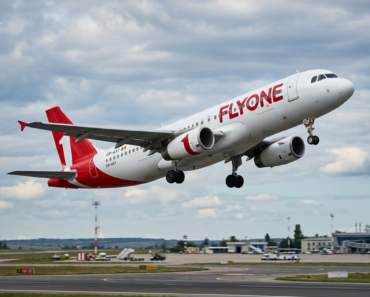
flydubai is a low-cost carrier headquartered in Dubai, United Arab Emirates, operating scheduled passenger services across the Middle East, Africa, Asia, and Europe. Founded in 2008 and wholly owned by the Investment Corporation of Dubai, the airline was established to open underserved routes and stimulate travel demand across markets that legacy carriers had largely bypassed. Since its first flight in 2009, flydubai has grown into one of the region’s most active point-to-point operators, connecting dozens of cities directly to Dubai International Airport (DXB).
The airline operates independently but maintains a close commercial relationship with Emirates, sharing Terminal 2 at DXB and coordinating schedules to allow seamless connections across both networks. This arrangement gives flydubai passengers practical access to a far wider global network than its own route map would suggest. flydubai is not a member of any of the three major global alliances — oneworld, SkyTeam, or Star Alliance — and positions itself as an independent value carrier rather than a full-service network airline.
As of 2026, flydubai serves well over 100 destinations across more than 50 countries, with a fleet composed entirely of Boeing 737 family aircraft. The airline has continued to expand its European and Central Asian footprint, and Baku remains one of its established destinations in the South Caucasus corridor.
Operations at Baku Heydar Aliyev (GYD)
At Heydar Aliyev International Airport, flydubai operates from Terminal 1, which handles all international scheduled services at GYD. Passengers travelling on flydubai check in at the international check-in hall within Terminal 1, where the airline is assigned counters in the mid-hall band alongside other Gulf and Middle Eastern carriers. The check-in process follows standard international procedures, with baggage drop typically opening three hours before departure.
The Baku–Dubai rotation is operated using Boeing 737 MAX 8 aircraft, which is the type flydubai has progressively deployed across its medium-haul network as it has taken delivery of new-generation narrowbody equipment. The service runs on a daily frequency, providing consistent connectivity between GYD and DXB throughout the week with no seasonal suspension. Departure and arrival windows are structured to allow onward connections at Dubai International, particularly into the Emirates network operating from Terminal 3.
Routes from Baku
flydubai currently operates the following route from Baku Heydar Aliyev International Airport:
- Baku (GYD) → Dubai (DXB): Daily service operated by Boeing 737 MAX 8. This is flydubai’s sole GYD route and the airline’s primary link between Azerbaijan and the UAE, enabling onward connections across the Emirates and flydubai combined network to destinations in Asia, Africa, and beyond.
While flydubai’s GYD footprint is currently a single-route operation, the Dubai hub effectively functions as a transfer gateway to a broad range of secondary destinations not directly served from Baku, including cities across the Indian subcontinent, East Africa, and Southeast Asia.
Aircraft fleet (Baku-relevant)
flydubai operates an all-Boeing narrowbody fleet, and the aircraft type assigned to the Baku route is the Boeing 737 MAX 8. This new-generation aircraft replaced earlier 737 Next Generation variants on medium-haul routes as the airline’s MAX deliveries progressed. The 737 MAX 8 offers improved fuel efficiency over previous-generation 737s and is configured by flydubai in a two-class layout featuring Business and Economy cabins. The aircraft’s range comfortably covers the approximately 2,600-kilometre sector between Baku and Dubai without technical stops. Passengers on the GYD–DXB route can therefore expect a modern, single-aisle cabin with overhead bins, in-seat power options in Business class, and a consistent onboard product aligned with flydubai’s wider fleet standardisation.
Codeshare and alliance
flydubai is not a member of oneworld, SkyTeam, or Star Alliance. However, the airline holds a significant codeshare agreement with Emirates, which is the arrangement most relevant to passengers travelling through Baku. Under this partnership, Emirates (EK) places its code on selected flydubai-operated flights, and flydubai reciprocates on Emirates routes. For Baku-bound travellers, this means it is possible to book a single itinerary combining an Emirates long-haul flight into DXB with a flydubai-operated onward sector to GYD, or vice versa, under coordinated baggage rules and connection times. Beyond Emirates, flydubai has interline agreements with a range of carriers that facilitate through-ticketing, though the Emirates partnership remains the most commercially significant for passengers originating in or travelling to Azerbaijan.
Booking and class options
flydubai offers two cabin classes on its Boeing 737 MAX aircraft: Business Class and Economy Class. There is no First Class product. Business Class on the Baku route features a reconfigured forward cabin with wider seats, enhanced meal service, and increased baggage allowance. Economy Class is available in standard and value fare tiers, with ancillaries such as seat selection, checked baggage, and meals available as add-ons depending on the fare purchased. The airline’s website at flydubai.com is the primary direct booking channel, and the flydubai mobile app supports booking management, check-in, and boarding pass storage. Tickets can be booked direct or through Max Travel, which combines flights with hotels and Baku airport transfers.
Stay connected on arrival
Travellers landing at GYD can pick up a Baku-ready data eSIM from DataMax for instant connectivity, avoiding airport SIM kiosks. Activating an eSIM before or immediately after landing means passengers can access maps, ground transport apps, and hotel confirmations the moment they clear arrivals at Terminal 1, without queuing at physical retail points inside the terminal.