Flights from Baku to Tbilisi — Heydar Aliyev (GYD) to Tbilisi International (TBS)
Flying from Baku to Tbilisi
The Baku–Tbilisi route is one of the most natural short-haul connections in the South Caucasus. Two capitals, roughly 500 kilometres apart by road, separated by just about an hour in the air — it is the kind of flight that makes a weekend trip genuinely effortless. Whether you are travelling for business, heading to Georgia for a holiday, or using Tbilisi as a stepping stone to onward destinations in Europe or the Middle East, flying from Heydar Aliyev International Airport (GYD) is the fastest and most comfortable way to make the crossing.
Three carriers operate direct service on this route: Azerbaijan Airlines (AZAL), its low-cost subsidiary Buta Airways, and Georgian Airways. Between them, the route typically sees three to four daily departures, with frequency rising during summer and around public holidays in both countries. AZAL and Buta Airways depart from the main international terminal at GYD — the striking wave-shaped building that handles the bulk of Baku’s international traffic. Georgian Airways operates on the same terminal side. At the Tbilisi end, all arriving international flights use Tbilisi International Airport (TBS), which has a single integrated terminal serving both arrivals and departures.
Block time on the GYD–TBS sector is typically around one hour, though scheduled times are often padded slightly to account for taxi and airspace sequencing. In practice, wheels-up to wheels-down is close to fifty-five minutes on a direct routing. It is genuinely one of the shortest international flights you can take from Baku, which makes it a practical option even for day trips, though most travellers stay at least two or three nights to make the most of what Tbilisi offers.
About Tbilisi
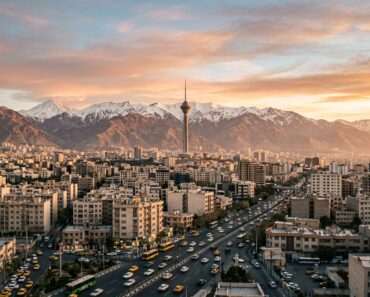
Tbilisi is the capital and by far the largest city in Georgia, home to well over a million people in the city proper and considerably more across the wider metropolitan area. The official language is Georgian — written in its own distinctive Mkhedruli script — though Russian remains widely understood among older residents, and English is increasingly spoken in hotels, restaurants, and tourist areas. The currency is the Georgian Lari (GEL). The climate is continental with a mild edge: summers are warm and sunny, winters are cold but rarely severe in the city itself, and spring and autumn offer some of the most pleasant travelling conditions in the region.
People visit Tbilisi for a wide range of reasons. Leisure travellers come for the old town architecture, the wine culture, the food scene, and the relatively low cost of living compared to Western European capitals. Business travellers are drawn by Georgia’s open economy, its growing tech and startup sector, and its role as a regional hub for trade and finance. A significant number of Azerbaijani visitors also use Tbilisi as a transit point, connecting onward to European destinations or simply crossing for a long weekend. The city has invested heavily in its tourism infrastructure over the past decade, and the results are visible: the old town has been sensitively restored, the restaurant scene has matured considerably, and the city feels genuinely welcoming to international visitors.
Visa for Azerbaijani and regional travellers visiting Tbilisi
Georgian visa policy is among the most liberal in the region. Citizens of Azerbaijan can enter Georgia visa-free for stays of up to one year, making this one of the most accessible international destinations available to Azerbaijani passport holders. Citizens of many other regional nationalities — including Russia, Ukraine, Armenia, and most EU countries — also benefit from visa-free or visa-on-arrival arrangements, though the specific terms vary by nationality and are subject to change. Always confirm your entry requirements before travel. For the latest visa rules, see our visa information page.
Getting around Tbilisi
Tbilisi International Airport sits roughly 18 kilometres east of the city centre, and getting into town is straightforward. The airport express train — a dedicated rail link — connects TBS to Tbilisi Central Station in around 30 minutes and is the most cost-effective option for independent travellers. City buses also serve the airport, though they are slower and less convenient with luggage. For door-to-door transfers, Bolt is the dominant ride-hailing app in Tbilisi and works reliably from the arrivals hall; Yandex Go also operates in the city. Standard taxis are available at the rank outside arrivals, but agree on a fare before you get in or insist on the meter. Within the city itself, Tbilisi has a metro system with two lines covering the main central districts, supplemented by a dense network of minibuses (marshrutkas) that reach neighbourhoods the metro does not. For most visitors, a combination of Bolt and the metro covers virtually every journey you are likely to need.
Where to stay in Tbilisi
Tbilisi’s accommodation scene has expanded significantly, and the neighbourhood you choose shapes the experience considerably. The Old Town (Altstadt or Dzveli Tbilisi) is the most atmospheric option — cobbled lanes, carved wooden balconies, and proximity to the major sights make it popular with first-time visitors and leisure travellers who want to be in the middle of everything. Rustaveli Avenue and the area around Liberty Square form the city’s main commercial spine and suit business travellers who need easy access to offices, banks, and conference venues. The Vake district, on the western side of the city, is a quieter, more residential neighbourhood popular with longer-stay visitors and expats; it has good restaurants and a relaxed pace. Vera, adjacent to Vake, has a slightly bohemian character with independent cafés and boutique guesthouses. For travellers on tighter budgets or those who prefer a hipper, less polished atmosphere, the Marjanishvili and Chugureti areas on the left bank of the Mtkvari River have developed a lively bar and café culture in recent years. Most Baku-based travellers book Tbilisi hotels through Max Travel, which handles flight + hotel packages from Azerbaijan.
Things to do in Tbilisi
Narikala Fortress — the ancient hilltop citadel overlooking the old town, reachable by cable car from Rike Park, with panoramic views across the Mtkvari River valley.
Abanotubani (Sulphur Bath District) — the domed bathhouses in the old town’s eastern quarter, fed by natural sulphur springs, where you can book a private bath for a genuinely local experience.
Rustaveli Avenue — the grand central boulevard lined with theatres, the National Museum of Georgia, and the Parliament building, ideal for an orientation walk on arrival.
Georgian National Museum — home to an outstanding collection of gold and silver artefacts from ancient Georgia, as well as natural history and Soviet-era exhibits.
Fabrika — a converted Soviet sewing factory in Chugureti that now houses independent shops, food stalls, a hostel, and one of the city’s best outdoor social spaces.
Mtatsminda Park and Pantheon — the hilltop park above the city, accessible by funicular, with an amusement park, restaurants, and the Mtatsminda Pantheon where many of Georgia’s most celebrated writers and public figures are buried.
Food and dining in Tbilisi
Georgian cuisine is one of the great undiscovered food traditions of Europe and the Middle East — rich, herb-forward, and built around communal eating. The staples that every visitor should try include khinkali (large soup dumplings filled with spiced meat or mushrooms), khachapuri (cheese-filled bread, with the Adjarian boat-shaped version being the most dramatic), and a wide range of walnut-based cold dishes. Georgian wine, produced using the ancient qvevri clay-jar method, is a serious subject in its own right, and Tbilisi has no shortage of wine bars dedicated to natural and amber wines from the Kakheti and Kartli regions.
For dining, the old town and Rustaveli area have the highest concentration of restaurants catering to international visitors, ranging from traditional Georgian taverns (look for places with live folk music in the evenings) to modern Georgian bistros that reinterpret classic dishes with contemporary technique. The Dezerter Bazaar market near the central station is worth a morning visit for local produce, churchkhela (walnut-and-grape candy), and fresh spices. Travellers from Azerbaijan will find the flavour profiles familiar in some respects but distinct enough to feel genuinely new — the herb combinations, the sourness of tkemali plum sauce, and the richness of the walnut pastes set Georgian food clearly apart.
Staying connected in Tbilisi
Travellers landing in Tbilisi can avoid roaming charges by buying a local data eSIM before they fly. DataMax provides ready-to-activate eSIMs for Georgia and Georgia, working from the moment you land. This is particularly useful given that Georgian mobile networks — Magti, Geocell, and Beeline Georgia — offer fast 4G and expanding 5G coverage across Tbilisi, but roaming costs from Azerbaijani SIM cards can add up quickly on even a short trip. DataMax eSIMs can be configured on your phone before departure, so you step off the plane already connected. If you are booking through Max Travel, note that they also offer bundled flight and eSIM packages, which is a convenient way to sort connectivity at the same time as your travel arrangements.
Practical tips for Tbilisi
• Currency: The Georgian Lari (GEL) is the only currency accepted in most shops and restaurants. ATMs are plentiful in central Tbilisi and at the airport; card payments are widely accepted in hotels and larger restaurants, less so in markets and smaller eateries.
• Power plugs: Georgia uses the standard European two-pin round plug (Type C/F), the same as Azerbaijan, so Azerbaijani travellers will not need an adapter.
• Safety: Tbilisi is generally a safe city for tourists, including solo travellers and women travelling alone. Normal urban precautions apply — be aware of your surroundings in crowded areas and use reputable ride-hailing apps rather than unmarked taxis at night.
• Tipping: Tipping is appreciated but not obligatory. Around 10% is a reasonable amount in sit-down restaurants; rounding up is common for taxis and café service.
• Language: Download the Georgian keyboard or a phrasebook app before you travel — the Mkhedruli script is beautiful but completely unfamiliar to most visitors. Google Translate handles Georgian reasonably well and the camera translation feature is useful for menus and signs.
• Time zone: Georgia is in the GMT+4 time zone, the same as Azerbaijan, so there is no jet lag or clock adjustment to worry about.
How to book this trip
The GYD–TBS route is well served and easy to book, but combining your flight with accommodation and an airport transfer in a single package saves time and often money. Check availability across AZAL, Buta Airways, and Georgian Airways for the dates that suit you, and consider booking during shoulder season — spring and autumn — if you want lower fares and smaller crowds. Confirm your visa status before purchasing, and sort your connectivity in advance so you are not scrambling for a SIM card in the arrivals hall. Book your flight from Baku to Tbilisi, plus airport transfer and hotel, through Max Travel. Get a Georgia eSIM through DataMax before you fly.